Friday, May 31, 2019

Swimming the Sea of Rocks at Tammany 10!

Felsenmeer...

A sea of rocks.

Felsenmeer
Photo by Elizabeth Azze, Mountain Peak Fitness

From that sea, a massive wave rears its head. Known as Tammany, it dominates the region like the powerful Lenape chief whose name it bears.

Mount Tammany from across the Delaware River
Photo from Wikipedia

The Tammany 10 is less a race than a challenge. The concept is simple. Two trails climb to the summit of Mount Tammany from the Delaware River: the steep and rocky Red Dot Trail and the slightly-less-steep-but-still-very-rocky Blue Trail.

Mount Tammany loop

For normal people, climbing the Red Dot and descending the Blue makes for a scenic 3.3 mile day hike with about 1,200 feet of climbing.

Those who are dumb brave enough to sign up for Tammany 10 must reach the summit - you guessed it - ten times. Adding in an out and back from the start/finish area every two loops makes this a 38 mile race with 12,000 feet of climbing and an equal amount of descent.

The resulting elevation profile looks like a fine tooth comb:

Tammany 10 elevation profile

Tammany 10 is the premiere trail racing event in NJ, and likely the only true mountain race in the state. I had volunteered at the aid station there in 2017 and 2018, since grilling quesadillas by the Delaware River seemed like a much more enjoyable use of a Saturday than hauling myself up a mountain ten times. In 2019, my FOMO got the best of me and I finally signed up.

As is tradition...

I woke up on race day morning with a sore throat and my head in a fog. In what I hope will not turn into a pattern, I had picked up a cold a few days earlier, but it seemed to be subsiding. I downed a shot of DayQuil, popped a zinc supplement, and hoped that my daily bucket of coffee would put some pep in my step.

The weather for the race was perfect... well, by my standards anyway. It was a brisk 24°F with 29 mile per hour winds. For those of you keeping score at home, that's a wind chill of 7°. For my stocky, prone-to-overheating body, that's as good as it gets. A light snow had fallen overnight, depositing just enough powder to make the course look pretty. I started the race with a thin long sleeve shirt, shorts, and gloves. I would go on to finish the wearing less than that.

At 6:35am, we set off on our challenge, 61 goddamned idiots bold adventurers.

I quickly fell back to the midpack as runners surged around me on both sides. It took me a few minutes to regulate my breathing since my cold had left me a little congested. Thankfully trail runners are unfazed by snot rockets and obnoxiously loud throat clearing. After an all-too-brief runnable section, I took out my trekking poles and set to work on the mile long 1,019' ascent of the Red Dot Trail.

One of the nice things about Mount Tammany is that the climb has numerous vistas along the way, including a 180° panoramic view from the summit. I tried to remind myself to take in all of these sights during the climb, since the descent offers no chances to relax and look around.

View of Mt. Minsi from the summit of Tammany in 2018

Once at the summit, it was time to put our heads down and focus on the ground lest we become one with it. The descent is relentlessly steep and technical for about a mile, before leveling out at the banks of Dunnfield Creek.

A runner negotiating the felsenmeer at the summit
Photo by Elizabeth Azze, Mountain Peak Fitness

After tap dancing downhill for what felt like hours (I just checked - it was actually 13 minutes), I reached the creek and caught up to Mendy Gallo and Kathleen Cusick, two of the most badass ladies you'll ever meet. I knew I was pacing myself right if I was in their company. Together, we finished the descent and got to work on the second climb. They were both moving well, and their enthusiastic conversation helped pull me along the climb. We reached the summit together, and I pulled ahead for the second descent of the day.

And so the pattern for the day began. Climb, descend, and repeat.

After every second loop, we made a short out and back to the start/finish area to check in with the race directors and grab our nutrition. The aid station was staffed by NJ ultrarunners Alex Galasso and Steve Lange, the latter of which holds the second fastest Tammany 10 finishing time ever. Needless to say, these guys knew how to get runners in and out of the aid station with everything they needed. If you're reading this, thanks for your help!

Since the remaining loops all pretty much run together in my head, here are some highlights from later in the race:

  • Seeing Mike Siudy just ahead of me and Mendy just behind me on every out and back. Too bad we didn't just run together since we all finished within a 20 minute window.
  • Hearing "Ay girl, you look good in them shorts!" and looking back to find Jay Lemos lapping me late in the race, running in first place. He had finished 2nd overall three times in his prior four Tammany attempts.
  • Chatting briefly with 2nd place runner Brian Rusiecki on one of the final laps and realizing that he was not going to catch Jay.
A very happy Jay Lemos after winning Tammany on his 5th attempt
Photo by Elizabeth Azze, Mountain Peak Fitness

Let's finish this thing up, shall we?

After running steadily all morning, I found myself at the base of the final climb. Only 3.5 miles and 2,400' of elevation change separated me from the finish. I had 57 minutes left to finish the loop if I was going to finish under my goal of 9 hours (okay, my A goal was to beat my buddy Ryan Espulgar's time of 8:45, but that wasn't going to happen).

If you've read my race reports before, you know the drill. Head down, ragged breathing, and probably a worse smell that usual. I wouldn't say that I red-lined on the final loop, but I was definitely orange-lining it, if that's a real thing. I didn't want to push myself too hard since I had a 100 miler in three weeks and I also didn't want to overexert while sick and end up passing out on the trail and having to be rescued.

After a 48 minute final loop, I jogged the final road section and crossed the finish line in 8:57:06, good for 7th place. Mike and Mendy both came in a few minutes behind me. Mendy had finished first woman, with the second fastest women's time in the history of the race! We quickly changed out of our gross racing clothes and spent the rest of the afternoon eating freshly grilled food, sipping on beer, and enjoying the sunshine.

Video from Mountain Peak Fitness (featuring Jay sending it! on his final descent)

You gotta pay the piper

It wasn't until I got home that night that I realized just how sick I was. It turns out that I had the flu (like, the actual kills-a-bunch-of-people-each-year flu), and the race effort inhibited my recovery quite a bit. I was up all night with chills and full body aches, and I didn't run for the rest of the week. So, I guess racing was a stupid decision. But sometimes you just have to send it!

On the bright side, this race gave me some confidence going into Hellbender 100. I had gone from 21st place after two loops to 7th place by the finish, and I had the smallest differential between my fastest and slowest double loop (6min 55sec).

Three weeks later, I would run the Hellbender 100. Stay tuned for more details.

Tuesday, March 5, 2019

Dry heaving my way to a finish at The Frozen Snot

"Aaaaaaaack!"

That's the sound of me dry heaving mid-run at the Frozen Snot 14 mile race.

Without breaking stride, I deposited a mouthful of last night's dessert (peanut butter ice cream, thankfully) onto the pristine white forest floor. I glanced at my GPS. Mile 1.9.

This was not going to be my day...

Picking my way up Barb's Kiss My Ass, mile 1.5
Photo by Mike McNeil

The Frozen Snot

The Frozen Snot is a race whose course is as ridiculous as its name. A true sky-race in the heart of central Pennsylvania, Frozen Snot is part trail run and part winter mountaineering expedition. Case in point, the trails were originally cut by local athlete Fred Stover so he could train to climb Mont Blanc.

The course packs a hefty 5,800 feet of climbing into just 13.5 miles, but that doesn't tell the whole story. The first 1.4 miles and the last 2.2 miles are on flat gravel roads, which means almost all of the climbing is actually done in under 10 miles of trail. But that still doesn't paint an accurate picture of what this course looks like.

Elevation profile

The steepest climbs require the use of all four limbs, and the steepest descents are equipped with fixed ropes to help keep runners upright. Due to the insane grades and the fact that the course is frequently covered in snow on race day, Frozen Snot is likely the only half marathon in existence that requires runners to carry microspikes or other traction devices. Perennial race winner Matt Lipsey eloquently summed up the course as "14.5 miles of bullshit."

Course map. Look at all those contour lines we crossed!

To add insult to (very likely) injury, the race is held on what is often the coldest weekend of the year.  This year was no exception as the temperature was a brisk 5°F when we toed the line on the morning of February 2.

With all that in mind, let's get back to the action.

Race Day, 3:00 AM

After hitting the snooze button three or four times I finally crawled out of bed, already tired after a night spent mostly in the bathroom. For reasons still unknown to me (karmic justice for posting stupid running memes on Instagram?) I contracted a nasty stomach bug 12 hours before the race and dealt with debilitating nausea and stomach cramps for the rest of the weekend.

As I shambled around our apartment gathering race gear, Alex wisely tried to convince me to sit this race out, but I insisted that we both run. There is a good reason why women outlive men. So despite her protests, we packed our bags and headed off on our 3 hour drive to McElhattan, PA.

I tried in vain to eat a bagel en route but my stomach somersaulted every time I swallowed a bite of food. I would have to make due with just liquid nutrition for the rest of the day.

A Rough Start

Somehow at least 273 people were crazy enough to sign up for this race, and we left in a mass start from the parking lot of a rural US Army Reserve Center. We had 1.4 miles of road running to warm up and sort ourselves out before entering the woods.

Up until my stomach issues arose the previous day, I had envisioned a top 10-20 finish at this race. I had hiked the course as a training run last winter, stopping for snacks and pictures along the way, and finished in 4.5 hours. I figured with a little effort, I could take 30 or even 60 minutes off that time. After all, this kind of shitty terrain is my specialty.

But when the starting gun went off, a mass of humanity sprinted forward jockeying for position and I could only waddle slowly behind them, fighting the urge to vomit onto the runner in front of me. I reached the first section of trail in about 100th place and stopped to put on my spikes. I then joined the conga line of people ascending Barb's Kiss My Ass, which climbed 1,022' through a boulder field in just 0.47 miles (40% grade).

Climbing was a welcome reprieve from the jostling of the initial run, and I managed to pass a handful of people on the narrow trail. However, with a foot of snow on the ground, the only way to move efficiently was to stay on the packed track left by the runners ahead of me. So mostly I just settled in and made slow steady progress.

Conga line on Barb's KMA
Photo by Dave Seasholtz

At the summit the trail flattened out briefly, and the transition back to running caused me to regurgitate the mouthful of melted ice cream that starred in the prologue to this story. I clenched down with my core muscles and tried to force everything else out, hoping that an empty stomach would be a happy stomach. No such luck. This would be the theme of my race: unproductive painful dry heaving whenever I tried to run.

Nevertheless I got to work on the ensuing (unnamed) downhill, which dropped 750' in 0.36 miles (-39% grade) through hard packed snow. These are the types of descents where speed depends less on athletic ability and more on a willingness to sacrifice your health and safety. I trusted my microspikes and leaned into the descent, careening past a dozen runners in only a few minutes.

Then it was time to gain all of that elevation back again on Goat Path Extension, which was 817' in 0.44 miles (35%). With the field spread out a little more, I was able to maintain an honest hiking pace while occasionally grunting words to the people around me.

Fixed ropes on Lightning Bolt
Photo by Dave Seasholtz

After another brief summit and another mouthful of my stomach contents spat into the snow, it was time to descend Lightning Bolt, which was a leisurely 1,002' in a mile (19%). This is about the grade of the trails that I train on at home, but any advantage I had was negated by the knot I felt in my stomach every time I tried to open up my stride. My ego was bruised as a couple runners passed me like I was standing still, chatting casually about how the trail felt "flowy." I politely disagreed.

Bridge at the bottom of Lightning Bolt
Picture from last year's training run

At the bottom we crossed a half frozen creek on a makeshift wooden bridge before climbing and descending Gut Check, which was more of a speed bump than an actual hill at only 136'. Then it was just a short flat jog through Laurel Run, a winding trail through dense mountain laurel, before we reached the first aid station at mile 4.8, more than 90 minutes into the race.

Drowning My Sorrows

I've seen my share of aid stations at trail races, and let me tell you that this one made a lasting impression. It was small by necessity, as everything had to be packed in on ATVs, but the selection was impressive. Two large folding tables were set out. One had the usual aid station fare along with bacon that was fresh off the campfire. The other was filled - absolutely filled - with different kinds of Fireball whisky, from the original cinnamon flavor to a Fireball RumChata concoction.

Aid Station 1
Photo by Dave Seasholtz

The bacon seemed like too much for my tender belly to handle, but I figured a shot of cinnamon liqueur might settle it a little. It went down easy, and I considered chasing it with another shot but then opted not to push my luck.

Onward and upward, quite literally. We climbed a short but nasty embankment called The Avenue which overlooked the aid station. At 335' of vertical gain in just 0.13 miles, The Avenue is one of the steepest sections of the entire course at a whopping 49% grade. Thankfully the lead runners had kicked footsteps into the snowy hillside which my spikes easily bit into. The sound of laughter and the smell of fresh bacon wafted up from the aid station the entire way.

After a short rope-lined descent down Debbie's Drop (477' in 0.42mi, -21%), we arrived at Why Not?, also known as Backside of the Beast. Despite being one of the longest climbs of the race, it was a manageable 24% grade, climbing 1,048' in 0.84 miles. I passed the time chatting with other runners on the way up and before I knew it we were standing at the summit of Mt. Logan.

Next up was the most difficult descent of the race: Mt. Logan Direct. This monster of a slope dropped 1,358' in 0.82 miles for an average grade of -31% and a peak grade much worse than that. A half dozen fixed ropes lined the descent, and I made liberal use of each and every one of them as I careened downward. I passed a handful of people who clearly valued their lives far more than I did. I also spotted at least one safety volunteer, who presumably was there to collect the shattered corpse of anyone who lost their footing.

Speaking of which, I would be remiss if I forgot to thank the dozens of volunteers who stood out in the cold all day. From the aid station workers who provided vital alcohol and pork products, to the course marshals who kept us from wandering aimlessly into the vast wilderness, everyone was cheerful and enthusiastic despite the frigid temperatures. Thanks guys and gals!

But back to the descent...

Strava shows that I covered this section at a 16:58/mi pace, which makes it sound like I was walking. But the speed I took this descent felt like 5K pace. My feet could barely keep up with my body as I half ran, half stumbled down the steepest face of Mt. Logan.

Once back on flat ground at the bottom, my stomach cramps returned and I was passed back by the last two people I had passed on the descent. I shuffled along the short stretch of gravel road leading to the Zindel Park aid station.

Prepare Ye

Convinced that any food I ate would immediately be un-eaten on the trail, I passed through this aid station without stopping and re-entered the woods. At the trail head was the following sign:

Prepare ye to meet The Beast

The course description lists The Beast at 1,300' of vertical gain over 2,900' of horizontal distance, or 45%. Strava claims that it is slightly less steep than that. Whatever the truth is, The Beast lives up to its name. The final and single largest climb on the course, the Beast ascends a boulder field parallel to Mt. Logan Direct before gaining a steep wooded ridge back to the summit of Mt. Logan.

This is the type of grade where it's hard for me to pace myself since even a slow walk makes my heart rate skyrocket. Luckily, I was following a woman who reminded me to take in the views of the mountains behind us. I didn't take any pictures of them, but I did quickly snap the first and only mid-run selfie of my life. Please enjoy my ice beard:

This race lives up to its name!

Now I'm pretty sure most of that ice is just from my breath condensing on my facial hair, but there's also a reasonably good chance that there is literally frozen snot in there too. So my experience truly lived up to the spirit of the race.

Back to work on the climb...

Here's what it looks like when you're fully in the grasp of The Beast, taken during my training run last year.


And here is what my sorry ass looked like to everyone else.

Meeting The Beast
Photo by Mike McNeil

But the difficult part of the Beast isn't the boulder field. It's when you get to the top of the boulder field and you realize you're only half way up. These are the moments that make you consider getting into basket weaving as a hobby instead of mountain running.

But luckily my legs felt good since I hadn't been able to run hard all day, so I made decent progress up The Beast and finally found myself standing at the summit of Mt. Logan for the second time. I took a few steps forward before my stomach rebelled yet again. So I walked for a little while. When everything settled, I ran a little, then felt terrible again and walked. This cycle repeated itself many times on the final descent, and I left a series of small peanut butter scented puddles on the white snowy trail the entire way down.

I passed through Zindel Park aid station again and was finally on the home stretch. A few hundred yards ahead, I saw a familiar neon yellow jacket. It was Alex, who was finishing up the 9 mile short course!

Alex looking characteristically cute on Barb's KMA earlier in the day
Photo by Dave Seasholtz

In a grand romantic gesture, I snuck up behind her and called out "Ay girl! You come here often?" Despite this, she was still happy to see me, and we jogged the last few miles together.

We crossed the finish line holding hands in 4:25:43, good enough for 41st in the long course and 47th in the short course respectively. I was three minutes slower than my previous training run, but I had a great experience and got to run two miles with my wife!

Done!
Photo by ‎Kirsten Ebeling-Labant‎

Epilogue

Pennsylvania does not mess around when it comes to building trails, and they take their post race food just as seriously. The Reserve Center was filled with pizza, soup, and other hot food. But I wasn't ready for solid food and Alex wasn't in the mood for any of their offerings, so we just collected our race swag (whisky glasses and fleece blankets!) and hit the road.

Mile for mile, Frozen Snot is right up there with the Barkley Fall Classic and the Swan Song Loop in terms of difficulty. The trails are as steep as anything you'll find in the Presidential Range and running this race in February gives it a true high alpine feel even though the high point is only 2,100 feet.

So ends our first experience with Pennsylvania trail racing. We can't wait to come back in better shape next year and give this race hell!

Monday, January 14, 2019

2018 in Review and 2019 Plans


It's a new year, and I have some big plans in store. But first, let's take a look at all the crazy crap I did in 2018.


2018 in Numbers

Total miles: 2,138 miles (3,440 km)
Miles per week: 41.0 miles
Time spent running: 487 hours (20 days, 7 hours)
Total elevation gain: 520,113 feet (98.5 vertical miles)
Number of marathons & ultras: 8

Highlights

2018 was the year where I finally admitted to myself that I enjoy mountain racing more than road racing. Case in point, I ran my lowest total mileage since 2014 but did way more elevation gain than any other year, nearly hitting 100 miles of vertical gain and loss. Here's a quick recap of my racing and other adventures.

My racing season started in February with the Mount Mitchell Challenge, which I treated as a long training run. This was the first time that Alex and I visited the Black Mountains, and the scenery at this race convinced me to come back again in 2019 (more on that later).

Starting line of the Mount Mitchell Challenge

One week later was the local Lenape 50K, where I again took it easy but still managed to hang on to 3rd place and snag a sweet home made trophy.

Some fast dudes. And me.

In April, I managed to PR in the marathon distance for the sixth straight year with a 3:12:56 at the NJ Marathon. However, I only managed to shave 2 minutes off my previous best after a full season of careful training, and this race convinced me that I don't particularly like road marathons any more. I will probably not run one in 2019.

Feeling good around the 10K mark of the NJ Marathon

Next up was the infamous Manitou's Revenge 54 miler, which was the first ultra that I had really raced since 2017's Grindstone 100. I was so nervous that I couldn't sleep at all the night before the race. On race day, I turned that nervous energy into some fast early miles, and I finished in 11th place with a 20 minute course PR despite a rough finish. Manitou's Revenge has quickly become my favorite race on the planet, and I am heading back in 2019!

The course at Manitou's Revenge is somewhat technical

In July, I headed up to New Hampshire's White Mountains for a solo adventure. I ran the Swan Song Loop, which is a 28 mile route that seeks out the most difficult trails in the Presidential Range. Rather than shoot for a particular time, I stopped for snacks and pictures along the way and really enjoyed a perfect day in the mountains. I plan to go back and run this route a little faster in 2019.

View of Mount Washington from Boott Spur on the Swan Song Loop

My "A Race" for the year was supposed to be Fat Dog 120 in August, but it was canceled at the last minute due to wildfires, which forced me to sign up for Grindstone 100 for the third year in a row. But first, I made a stopover at Frozen Head State Park to take on the Barkley Fall Classic 50K for the third (and possibly last) time. I put in a solid effort despite poor training and even poorer heat acclimation, and I finished just under ten hours, a 15 minute personal best.

People seem to like this picture for some reason. I'm glad my suffering amuses you.

Due to the cancellation of Fat Dog, Grindstone 100 became my only way to qualify for the annual Western States and Hardrock 100 lotteries. My 2017 race had gone really well, and I felt like I accomplished everything I wanted to do at Grindstone. So 2018 was an uninspired performance which was made significantly worse by a combination of poor decision making and tough race conditions. I finished in 27 hours and 59 minutes, by far my worst 100 mile performance to date. But I got those dang lottery tickets.

Grindstone in 2017 when everything went pretty well. 2018 was not so pretty.

Last but not least was the Hellgate 100K. Despite only being two months after Grindstone, Hellgate was a 2020 Western States qualifier. Needing only to finish under 17 hours, I took it easy and used this race as an opportunity to meet new people and see some new trails. I finished in 14:47 and got my lottery tickets for next year, which means I don't need to run any more qualifier races for a while.

View from our drive down to Virginia. This was the most scenic part of the weekend.

2019 Plans

So here I sit with no qualifiers needed this year (Hardrock qualifiers count for two years). I can run anything I damn well please. That means it's time to...

...do some terrifyingly hard shit!

I'm planning three 100 milers this year. Each one will be the hardest race I've ever done at the time I attempt it. One of them is at high altitude. One is a brand new race which is expected to have no finishers. They are:

  • Hellbender: 26,000 feet of climbing and descending through the Black Mountains of North Carolina (I told you I'd be back there!). In it's inaugural race in 2018, only two runners finished under 24 hours. One of them was Karl Meltzer, the greatest 100 mile runner of all time.
  • Ouray: One of the hardest 100 mile races on the planet. Ouray involves over 40,000 feet of climbing and descending through the rugged San Juan Mountains of Colorado. The course climbs multiple 12,000' peaks, and the first half of the race is almost entirely above 10,000'. Can I finish this thing under the 52 hour cutoff? Only one way to find out.
  • WTF: A new race from the RD's of Manitou's Revenge. WTF is an invitation-only Barkley style event which involves 108 miles, 40,000' of climbing, and long stretches of off trail navigation. It will be self supported and unmarked. May god help us all.
This schedule is extremely ambitious, and I'll admit that my heart rate spiked when I hit the "Register" button for all of these. But there's no point in playing it safe when there are so many adventures to be had. If I fail, I'll fail proudly and spectacularly. Happy New Year!


Full 2019 Race Schedule
(100 mile races in bold)

Date
Race
Distance
   2/2
14M 
   3/2
50K 
   3/23
50K 
   4/20Hellbender
100M 
   6/23
54M 
   7/??
25M 
   7/??
30M 
   7/26
100M 
   9/28
26M 
   10/18
WTF
100M 
   12/7
Frozen Fools
50K 
  

Wednesday, January 2, 2019

The Jersey Crew Takes on Hellgate

This is your annual reminder that not only do NJ ultrarunners exist, but we are pretty damn fast!

So fast that the cameras can't even capture us!
Photo by Alex during Manitou's Revenge in June

The Hellgate 100K+

The brainchild of Dr. David Horton, Hellgate is a point-to-point invitation only 100K in the mountains of central Virginia. Horton, or "King D-Ho" as his pre-race name tag introduced him, has a reputation for saying controversial things and being a bit of a sadist. He also runs one of the sketchiest looking race websites on the planet. Hence, I was not sure what to expect when I toed the line at his signature race. For the sake of those who plan to run the race in future years, here is what you will find.

Elevation profile that I carried with me
"Horton time" is listed for each aid station, whatever that means

The race is measured in "Horton miles," which means that each segment runs a little long. Hence, the full distance is about 66.6 miles, making the name Hellgate extremely appropriate. Nearly the entire course is run on fire roads, and even the singletrack trail sections are pretty mild by east coast standards. The difficulty of the course comes from the following facts:
Despite all this, Hellgate is a true runners course, requiring very little hiking from the fastest members of the field.

The New Jersey Crew

I have posted before about the state of NJ ultrarunning, but this was a race that really showcased how competitive NJ ultrarunners can be, at least on a regional stage. Here's the cast of characters:

Speedgoat Sightings and Where to Poop 

Alex, Nich, and I carpooled down to Virginia on Friday and arrived just in time to check in and get the free dinner that came with our race entry. Alex was coming off a nasty hip and hamstring issue that had sidelined him for most of the summer and fall, so he was looking to get his running back on track. Nich was stepping up to a new distance after lots of success at shorter distances in his first year of ultrarunning. And I was just hoping to take it easy and finish under the 17-hour cutoff required to get a ticket into the 2020 Western States lottery (Hellgate is too late in the year to qualify for the 2019 lottery).

Unfortunately, this would be the best view of the entire weekend

At the pre-race briefing, we thankfully didn't learn too much information. The biggest achievement during the hour-long event was figuring out who was driving us to the start, which was accomplished by Horton asking "who needs a ride?" followed by "who can drive them?" It was a frantic system, but it did the trick.

The second biggest achievement was snapping a picture of Karl "Speedgoat" Meltzer, the winningest 100 mile runner in history (and author of my least favorite running quote).

Even the Speedgoat has to attend mandatory briefings

The third biggest achievement came when Horton asked a group of Hellgate veterans what other advice they had. The first response that came back was a runner shouting "poop here!" which understandably left Horton a little rattled. After some discussion, it was revealed that there were no porta-potties at the starting line, so runners were best advised to use the facilities at the camp before our shuttles departed. Good to know!

A few short (much too short) hours later, we were standing at the starting line and singing the national anthem. Then for good measure, we also sang happy birthday to Karl, who turned 51 on race day. At 12:01 sharp Horton gave us a "ready, set, go" and we ran off into the night.

Douche Grade Climbing in the Pitch Black

If there is one thing I despise in races, it is so-called "douche grade climbs." These are the climbs that are juuuust steep enough that running is very slow, but not so steep that you feel justified in walking. The exact grade that qualifies as "douche grade" varies between runners and race distances (e.g. in a 100 mile race Jim Walmsley will run just about everything, but my slow ass will typically walk anything remotely steep). Unfortunately, almost all of the Hellgate climbs fit this description.

The first climb gained 1,500' over seven miles, and I settled into an awkward shuffle accompanied by Joe Limone, a NY runner who I see at a lot of local races. The climb was made much more enjoyable than it should have been thanks to his company and the fact that we could watch strings of headlamps ascending the switchbacks above and below us. It was a pretty cool sight on a pitch black night. Near the top of the climb, we got separated and I was running on my own. This would be the trend for the remainder of the race.

The first descent was a short but steep drop of 750' on singletrack. It seemed backwards to me that we would climb on a nice runnable road and then descend on something more technical, but such is life in a Horton race I suppose.

The second major climb was another 1,500' of ascent, this time in only four miles. This was still just barely runnable at my ability level and I shuffled along at a 13:00-14:00/mi pace, occasionally passing people who were hiking. Along the highest points of the course, there was about an inch of crusty snow on the ground. This didn't effect my footing much, but it had the delightful effect of muffling almost every sound except for my own breathing. Combined with the moonless night, I felt completely isolated from the world except for the occasional headlamp in the distance.

Mile 21 marked the high point of the course on the shoulder of Onion Mountain. The wind chill was a brisk 20 degrees and I wasted no time on the descent. I probably should have taken it a bit slower and I missed a turn and added two minutes and an unnecessary river crossing to my race. Classic Ryan! Thankfully my feet would dry out pretty quickly and no major damage was done.

Dayman, Fighter of the Nightman

I don't remember much about the next section (gravel roads have a tendency to all look alike in the dark), but eventually the sun peaked over the horizon as I picked by way down a 1,500' descent which marked the end of the high peaks on the course. Incidentally, this also seems backwards: why not have runners do the most scenic parts of the course during daylight instead of overnight? The answer, of course, is "because David Horton."

Anyway, I made a quick stop at an aid station here to grab a breakfast burrito (the food was amazing at all the aid stations!) and then another stop for a bio break shortly afterwards. This allowed Eric Anderson, a fellow Grindstone veteran whom I'd met at dinner, to pass me. I caught up quickly and we chatted all too briefly before he pulled away on a climb. He would go on to finish just four minutes ahead of me, which makes me think I should have pushed a little harder and had some company for the second half of the race. But I was not here to push hard. I was here to collect a lottery ticket and go home without beating up my legs too much.

My race continued uneventfully for the next few hours. I shared a few miles with Jersey boy Anthony Russo but I pulled away on a climb, finding that my easy start had left me with tons of energy to spare for the later miles. The course grew slightly more technical during these miles as the fire roads gave way to leafy single track. My Grade Adjusted Pace on Strava reflects this change in terrain.

Losing King D-Ho in the Forever Section

I had heard that there was a section late in the race known as the "forever section" due to its repetitive terrain and lack of any views. As I shuffled through the late miles, I kept trying to guess which section was the forever section, and I always guessed it was whichever section I was currently running. Apparently gravel roads look alike in daylight too.

Finally around mile 56, I reached it and understood what everyone was talking about. The "forever section" isn't a particularly hard portion of trail. It consists of three climbs and descents, each about 400 feet. The trail is covered in a thick layer of leaves and meanders aimlessly along ridges with no views while crossing nearly a dozen streams. It is slow an uninspiring terrain, and it comprises five miles out of the remaining ten on the course.

Until this point in the race, I had been roughly keeping pace with "Horton time," which is apparently the time it took King D-Ho to run each section when he initially mapped out the course. Now dealing with the only difficult terrain on the entire course, I started to fall behind. This was not a big deal of course, and I refused to push any harder than my planned "just finish the damn thing" effort level. But still, it would have been nice to say I beat Horton time without breaking a sweat.

Once through the forever section (FYI: forever lasts about an hour and 20 minutes), I was left with one last 1,500' climb and descent across the Blue Ridge Parkway and over the shoulder of Blue Knob. I put my head down and got to work. The miles were slow but steady, and I finally found myself on the side of the parkway with a lone spectator saying "all downhill from here!"

I took the descent nice and easy. I was going to be slightly over Horton time, but I was well under 15 hours, which sounded like a nice round number. As I cruised in to the finish, I was passed by a handful of runners who were redlining as I often like to do. As much as I was tempted, I resisted the urge to race them, and I jogged in with a time of 14:47:30, good for 44th place of 145 starters.

For a race that I didn't actually race (or prepare for in any way) I'm pretty happy with how I did. I'd like to think I could take 30-60 minutes off my time with better training and more effort, but I doubt I will ever go back to find out. Hellgate was extremely well organized and the volunteers were amazing, but those trails are just not my cup of Tailwind.


So How Did NJ Stack Up?

Well I wouldn't have made such a fuss about my state if we hadn't done something special down in those mountains. Here is the full list of NJ runners who finished:
  • #2 Rich Riopel (11:15): Rich finished 13 minutes behind Colorado's Darren Thomas. Darren beat Sage Canaday by 9 minutes at the Pike's Peak Marathon. Ergo Rich ≈ Sage.
  • #8 Nich Mamrak (12:07): Nich ran with Karl Meltzer early on and then dropped the old man like a bad habit. Nich would go on to beat the Speedgoat by 25 minutes in his first ever 100K.
  • #26 Konstantin Walmsley (13:52): Beat Jim Walmsley's Western States time. Suck it Jim!
  • #44 Ryan Thorpe (14:47): Got my lottery ticket.
  • #46 Anthony Russo (14:57): Got that sub-15 finish.
  • #51 Amy Nalven (15:17): 9th woman!
  • #53 Alex Galasso (15:23): Got back on the horse.
  • #63 Jesse Wolfgang (15:41): Beat his time from last year.
To recap, that's three NJ people in the top ten for their gender and eight in the top half of all finishers. Not bad for a little state with little mountains!

Thursday, November 29, 2018

Anatomy of a Meltdown - Grindstone 2018

"100 miles is not that far." —Karl Meltzer, ultrarunning legend
"Fuck off, Karl." —Ryan Thorpe, mid-pack doofus

They say suffering builds character. Well I just built a shit load of character in the mountains of Virginia. To get right to the point, I finished Grindstone in 27:59, a personal worst for the 100 mile distance and a 3+ hour positive split. Along the way I encountered more pain than I've ever experienced in a race.

Not from this race, but still very accurate

It took a while to get around to this post for reasons that will soon become clear. I contemplated burning the (mental) footage of this race, but then I figured it might be useful to list all the things that went wrong for the sake of posterity. You can think of this as an autopsy on the corpse of my race. 

Anyway, here are all my mistakes in chronological order.

Mistake #1: Not Training

After the 2017 Grindstone, I vowed never to toe the line of a 100 mile race without a solid training block under my belt. Training obviously prepares your body for the stress of running 100 miles, but it also gives you the confidence to tackle a huge endeavor like Grindstone.

With this in mind, I put in a four week block with 15,000' of climbing per week in May and then another three week block with 20,000' per week in July. I capped this off with a 15-hour self supported Swan Song Loop in New Hampshire's White Mountains.

Elevation profile from one of my harder training runs:
four repeats of Peekamoose Mountain in 85 degree weather.

This would have all been excellent preparation for my original goal race, the Fat Dog 120 in August. However, Fat Dog was canceled due to horrifically bad wildfires that left the entire west coast of North America choked in hazy black smoke for months.

Unable to muster the enthusiasm for another hard training block, and facing work and family commitments that I had put off for months, I slacked off on my training in August and September, and I showed up to Grindstone under-prepared and under-confident.

Mistake #2: Not Acclimating to the Heat

This goes hand in hand with the previous mistake. Grindstone was abnormally hot this year with a heat index that varied from 70-85 degrees. Various estimates say that this temperature range slows runners down by 10-20% unless they make a concerted effort to acclimate before race day. I did not make any such concerted effort, and therefore I suffered. See the race footage below.


Even before my nutritional and chafing woes later in the race, I was never comfortable with the hot humid weather on race day. When I saw Bryan Slotterbach around mile 55 and he asked me how I was feeling, my immediate response was "I feel like shit!"

Mistake #3: Not Testing My Race Gear

Oh boy, this is the big one.

As the old saying goes, "don't do anything new on race day." But as a seasoned 100 mile veteran, I of course know better. Let's break this mistake down a little further:
  • Had I trained in my (relatively) new shoes rather than "saving them for race day," I would have realized that they were full of volcanic dust from a brief run at Mount St. Helens back in August. I also would have realized that this silica rich dust has a tendency to turn my socks into sandpaper and chafe the ever-loving hell out of my feet. I finished Grindstone with blisters on the top and bottom of both feet, as well as severe chafing on the sock line of my ankles. My foot pain was so severe by the end of the race that I could barely walk, let alone run.
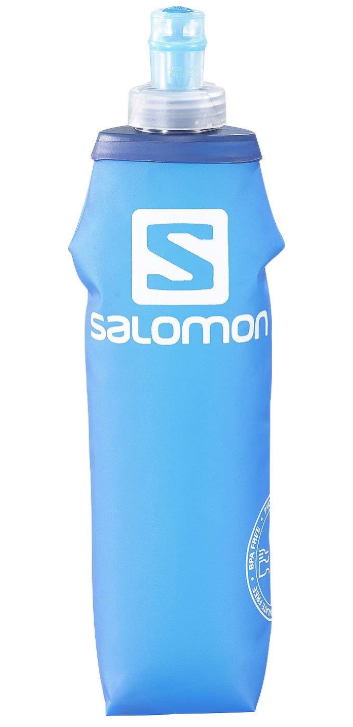
  • Had I used my fancy new Salomon soft flasks I would have realized that they are impossible to fill with Tailwind powder, my preferred nutrition. Luckily I had packed an Ultimate Direction flask with a wider mouth. I filled it with a double strength Tailwind mix to make up for the two useless Salomon flasks. This double strength mixture proved to be nauseatingly strong later in the race, causing me to dry heave whenever I took a drink. Unable to take in calories, I hit the wall hard around mile 80 and even ended up having dizzy spells around mile 90. (Cheers to my family, who didn't know about that last part until just now!)
Seriously, how TF are you supposed to get
anything other than water into that opening!?

Mistake #4: Not Getting Enough Sleep

Grindstone is somewhat unique in that it has a 6pm Friday start time. For night owls like me, this is not usually an issue since it gets the nighttime running out of the way early in the race. My typical pre-race plan is to drive down on Thursday night, sleep in as late as possible on Friday, and start the race feeling fresh.

Well... I drove down late on Thursday as planned and arrived at 2am. To save money, I booked a room at a local Airbnb. The house was beautiful, but my "room" was an alcove that was separated from the living area by just a curtain. At 7am the owner's very friendly dog came sniffing around to inspect the new human (me) that was staying in his house. I woke up to a wet nose in my ear, which was really cute but not the best way to start a 40+ hour day.

Mistake #5: Not Having a Crew

Okay, this is not really a mistake. But I did underestimate the importance of having a crew. This was my first 100 mile race that Alex was not able to attend. I knew that crews saved me valuable time at aid stations and provided much needed moral support, but I didn't appreciate all the problem solving that a crew does in order to get a runner to the finish line.

Including dealing with gross foot issues.

In 100 mile races, small problems can rapidly turn into big problems. And this race was an endless parade of small problems that I was not equipped to deal with on my own.

Alex, please come back!

Mistake #6: Killing My Car Battery

This is not really related to my race performance, but I did manage to kill my battery by charging my phone and playing the radio before the start of the race. By the time I realized what I had done, the race was about to start and there was nothing I could do to fix the issue. Some nice volunteers helped me jump it afterwards, but this stupid issue was on my mind for the entire 28 hours I was on the course.

Mistake #7: Not Fixing Small Issues

I don't like stopping during races. I typically limit myself to 1-2 sock changes in a 100 miler and otherwise I don't sit down at all. Sitting breaks up my momentum in a way that I often have trouble recovering from.

There's plenty of time to sit after the race
Photo taken by Alex in 2017 (obviously happier times)

However, this was one of those races where an extra 5-10 minutes at a few aid stations would have saved me a lot of time and trouble later on. I had extra socks stashed at the 66 mile aid station which I opted not to use because I didn't want to sit. I also could have taken some time to eat and drink to make up for my other nutrition issues. Instead, I stubbornly pushed on, getting progressively slower until I could barely walk forward.

Mistake #8: Doing It All Over Again

I have visited the pain cave in previous races. I would even say that I'm well acquainted with it. But this race was where I finally made a permanent residence in the pain cave. Or at least built a summer home.

Despite all this, I'm already dreaming of next year's races. So, obviously I haven't learned my lesson at all. I'm not sure what 2019 will bring, but I have some big things in mind.

Friday, October 19, 2018

Les Trois Croix - Barkley Fall Classic 2018

"It doesn't get any easier; you just get faster" Greg LeMond

You also don't look any prettier.
Photo by Misty Wong

I'm going to be honest with you guys. I was not in a good place after Fat Dog 120 was canceled in August. I had put months of hard training into that race, and I arrived on the west coast feeling the fittest I've ever been. Flying home without a buckle was demoralizing. I felt like I had wasted all of those long weekends that I spent logging tens of thousands of feet of climbing and descending.

I needed a win. And by that, I mean that I needed to get my ass kicked in a race.

That's where the Barkley Fall Classic comes into this story.

Background

I have written extensively about the history behind the Barkley Fall Classic, so I won't go into much detail here. Suffice it to say that the BFC is one of the hardest 50K's in the country, combining a stout 11,000+ feet of climbing and descending with extended sections of bushwhacking and a bit of navigation through the backcountry trails of Frozen Head State Park in Tennessee. The winning times have varied from 7.5 hours to 9.5 hours over the years, and the top male and female receive a guaranteed entry into the Barkley Marathons.

I had run this race in 2015 and 2016, back before the Barkley Marathons was catapulted to worldwide fame by a documentary. When I tried to sign up for this year's race, I quickly learned that this little known 50K had grown up. The massive wave of people simultaneously attempting to register crashed UltraSignup for several hours in the middle of the night. But when the dust settled, I was in!

The Wednesday before the race, I got a text from my buddy Mike Siudy asking if he could drive down to Tennessee with me. He had just gotten off the wait list 11 months after signing up! Three days later, we found ourselves standing at the starting line of the Barkley Fall Classic, ready to tackle a beast of a race.

It Begins... (Start to Salvation Road)

At precisely 7am, Laz lit a cigarette and we were off.

Lazarus Lake is the conductor in a symphony of pain
Photo by Kristopher Cargile

About a week before the race, I had written a snarky condescending post titled How to Survive the Barkley Fall Classic (maybe), in which I recommended training hard and starting the race at an easy pace. So naturally, I showed up to the starting line in questionable shape and I hauled ass for the first 1.5 miles to get around the teeming crowd of runners.

So uhh... do as I say, not as I do.

By the time we hit the narrow singletrack of Bird Mountain Trail, I found myself in about 50th place which seemed perfect. I was quickly passed on the first climb by Mike and Giuseppe Cavallo (with whom I had shared some miles at Manitou's Revenge) as well as a half dozen other runners. 60th place was fine too.

I plodded onward, allowing my heart rate to settle a bit after the frantic start. The first several hours of BFC are all on well established trails, and it's almost impossible to get lost. I say almost impossible because I had to correct several runners who inexplicably started to follow unmarked game trails or dry creek beds during these early miles. But then, who am I to judge other runners for poor navigation.

♫ Makin' my way uphill / Walkin' fast, trees pass / And I'm Rat Jaw bound
Photo by Misty Wong
Lyrics by Vanessa Carlton, sort of

The first few climbs and descents were uneventful. As usual, I got passed or maintained my position on the climbs and then passed other runners on the descents. I reached the first aid station in just over two hours, which was about 10 minutes faster than in 2016.

The aid station volunteers were football players from Coalfield High School, and they proudly informed me that they had won their game the previous night. In fact, I found out later, they had crushed their local rivals by a score of 49-0! Despite their victory, they were extremely humble and supportive of the runners. Most of their questions and statements were followed by the word "sir."

"Can I fill your water bottles, sir?"

"You're doing a great job, sir!"

I felt like a celebrity getting that kind of treatment, aside from the fact that I smelled and looked like some kind of drowned woodland rodent.

Anyway, back to the race. The new section of the course on Fork Mountain was covered in mud and standing water, but was otherwise pretty runnable. On the long descent down to Rt. 116 the trail became more exposed, and the heat and humidity started kicking in. I absolutely hate running in the heat, and the forecasts had called for a heat index of 98 degrees during the afternoon. I took the next few miles pretty easy to keep my core temperature down, and then I immediately doused myself in creek water when I reached the Salvation Road aid station.

Not me, but you get the idea
Photo by Mary Bogart

Beat the Rat (Salvation Road to Decision Point)

Now four hours and 15ish miles in, we were about to begin the crux of the race: the powerlines. The next five miles would take over two hours and include more than 4,000 feet of elevation change through briers, brambles, and brush (oh my!).

This was what I came for.

First up was Testicle Spectacle, a mile-long 800+ foot climb with multiple pitches, making it impossible to see the top from the bottom. The course followed rough jeep tracks briefly before crossing several dry creek beds and then ascending so steeply that I had to dig my hands into the dirt to pull myself up. I passed a handful of other runners in this section, one of whom was hunched over vomiting.

"You okay?" I asked.

"Yeah," he responded between heaves. "What's the name of this climb? I want to remember where I started puking."

Forty minutes later I reached the summit and was surprised to find a birthday party in full swing.

You never know what you'll find on the trails of Frozen Head

"Thanks for coming to my birthday party!" cheered a woman wearing beads and a party hat.

"I wouldn't miss it for the world!" I responded. The crowd seemed pleased.

That feeling when you get to stop climbing

Having gained a bunch of elevation over the past forty minutes, it was time to give it all back. The descent was down another steep slope known lovingly as Meth Lab Hill. As in previous years, there were clear butt slide marks down the steepest sections where other runners had abandoned all hope of staying on their feet. I managed to keep my footing by turning sideways and surfing down. Sadly I don't have any pictures of this. I'm sure I looked very cool.

I arrived at the bottom of the hill still feeling fresh, but much hotter than I would have preferred. I found a muddy creek and splashed water on my face and neck. If I turn out to have an e coli infection later on, I want it known that this creek was the culprit.

Having cooled off sufficiently in dirty Meth Lab Hill water, it was time to face the rarest of obstacles in the Barkley Fall Classic: a mile of running on flat pavement. How bizarre! I trotted along at a conservative pace, keenly aware of how quickly my core temperature was increasing despite being soaked in water.

A short while later, I arrived at the entrance of Brushy Mountain State Penitentiary. Race volunteers directed me through the prison yard and up to the rear wall where James Early Ray had escaped decades before. Standing guard at the top of the wall was none other than Jared Campbell, the legendary ultrarunner, adventurer, and only three-time Barkley Marathons finisher.

Typical Saturday. Thrash around through briers and escape from prison. The usual.
Photo by Larry Perry

Before I left for Tennessee, Alex had told me in no uncertain terms to take a selfie with Jared. I'm not one to disappoint my wife, so I scurried over as fast as my legs could carry me and snapped a picture.

Cool!

Jared directed me and another runner toward the prison tunnel. The other runner, who shall not be named here, was very dismissive. He informed Jared that he had run this race before and didn't need directions. Naturally he wandered off course during the next climb and I didn't see him again until after the end of the race. The lesson: when Jared Campbell gives you advice on navigating Frozen Head, you listen to him! (I would end up talking to this runner later on, and he's a good guy. Hey other runner, if you're reading this, please take this in the good nature it is intended.)

Anyway...

The prison tunnel was a welcome break from the midday sun, but it was short lived. At the end of the tunnel, we began the hardest mile of the race: a 1,700 foot ascent of Rat Jaw.

Let's set the stage. Most runners reach Rat Jaw during the hottest part of the day. Unlike the other power line cuts, Rat Jaw has no discernible path. The lead runners have to force their way through thickets of head-high briars, and subsequent runners can (sometimes) follow the faint trail that's left behind. Rat Jaw is also significantly longer and steeper than the prior powerline cuts. Oh and it's also exposed to the sun for its entire length. In short, it's a slog.

Spot the runner in the brier patch
Photo by Misty Wong

As you might expect, this was where the race really started to take a toll on the field of runners. One by one I passed people sitting or hunched over on the side of the "trail." More than once, I started leading a group of runners through the briers only to turn around and find that they had stopped when they found a small patch of shade. I knew if I rested, I would never be able to convince myself to get going again. Onward and upward, or some stupid shit like that.

As I remembered from previous years, the climb was endless. Time stood still on that mountain. I heard my heartbeat pounding in my ears as my head threatened to explode from the heat and exertion. I began to wonder if I had died and was sentenced to an eternity of climbing in this sun scorched hellscape. After weeks (months? years?) of climbing, the fire tower came into view.

By the time I reached the top, my legs were covered in fresh blood, and the rest of me was covered in sweat, dirt, and debris. It had taken 62 minutes to cover the previous mile. Photographer Misty Wong snapped a picture of me smiling like an idiot, but she informed me that she wanted pictures of crying devastated runners, hence the picture at the top of the post.

Counting how many gallons of blood I spilled on the course
Photo by Misty Wong

The view from the fire tower was nice, but I didn't stick around any longer than necessary. I passed Giuseppe on the way down from the tower and wished him well.

You can see why they chose to build a prison in this wilderness
Photo by Sword Performance

It was time to get back on real trails and - get this! - run for a little while. The four mile descent to the decision point was pretty tame by east coast standards, but I couldn't muster anything more than a jog. Although my legs felt fine, the heat had sapped my energy. Fifty minutes later, I arrived at the decision point.

One Last Climb (Decision Point to Finish)

I stuffed some food and pickle juice in my mouth, refilled my bottles, and marched over to Laz for the final bib punch.

"Are you continuing on, or dropping down to the marathon?" he inquired.

"Laz," I responded, looking him straight in the eye, "I didn't come here to run no stinkin' marathon!"

The volunteers cheered, and I ran onward to finish the final nine mile loop: Chimney Tops. Now on it's own, the Chimney Tops loop is not particularly difficult. However, after 7.5 hours of running in the heat and humidity, this final mountain is a killer. Maybe it's the fact that there are multiple false summits along the way. Maybe it's the fact that the trails get progressively steeper the higher you go. Maybe it's the fact that there was a nest of angry hornets that decided to attack my quads half way up (yeah, that shit really happened).

Regardless of the reasoning, this climb destroyed me. In the two hours it took to reach the Spicewood Aid station, I went from a strong motivated runner to a shambling mess.

Thankfully the weather started to cool down at this point. After gulping down a bottle of water at the aid station, I realized that I had a shot at breaking 10 hours and setting a personal best for this race. I had to do the final 3.5 miles in 45 minutes. Beating my previous time (10:11) on poor training and in worse weather would be a huge accomplishment, so I left the aid station on a mission.

The 2.5 miles back to the decision point were entirely downhill, and I ran every single step. I passed through the aid station with 9:47 elapsed and couldn't remember how far it was to the finish. A mile? A mile and a half? I pictured myself crossing the finish line with 10:00:01 on the clock and decided that was unacceptable.

It was time to run myself into the ground once again.

Ragged breathing. The taste of blood in my mouth. Tunnel vision. The heat. Good lord, the heat. I've gotten used to all the side effects of pushing this hard at the end of a race, but that doesn't make it any easier.

I stole a quick glance at my phone. Seven minutes left. Was that good or bad? How far to the finish line?

Head down. Keep pushing. Keep breathing. Ignore the way that people are staring at you. Ignore the fact that the sun is literally baking you and every natural instinct is telling you to stop.

Six minutes left. Was that really only a minute of running?

Inhale. Exhale. Repeat. Try to choke out a feeble "thanks" to the people clapping. Instead just snort at them like a bulldog with asthma.

Five minutes left. Holy shit, there's the finish line!

Try to compose yourself. There might be a photographer, and you can't use the picture if you're crying and/or soiling yourself.

Finally, after 9:56:19, I was done running! A 15 minute improvement on my previous time.

Post Race

Mike came over to congratulate me, but I made a bee-line for my cooler and doused my head in ice water. He had finished 20 minutes earlier and had overcome his own issues on the final climb, finishing 11th overall after running in the top ten for most of the day. Badass!

As for myself, I was 24th of the 400+ starters, and I was only an hour behind the winner. Not bad for a guy who didn't train and hates running in the heat.

Giuseppe came in a little while later, and the three of us posed for a picture showing how we felt about the course.
 
Dear Frozen Head, you're number one!

I received my third Croix de Barque and proudly added it to my collection when I got home. Then I threw them all in a drawer because I never know what to do with race hardware.

Les Troix Croix

Up Next

Three weeks later I would get well and truly destroyed by the Grindstone 100 in my worst hundred mile race ever. Stay tuned for a report.